
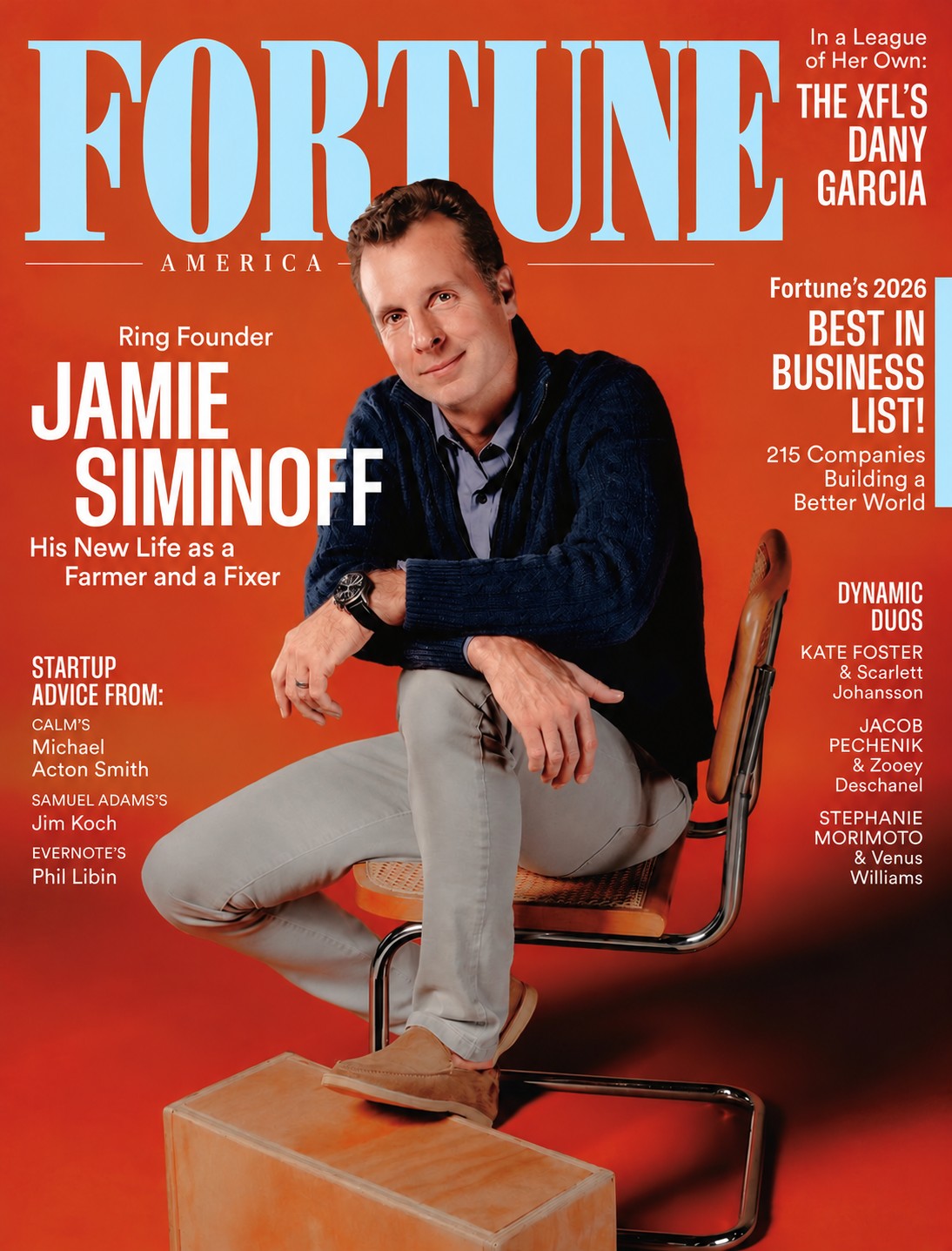
Jamie Siminoff: How Persistence Turned a Garage Invention Into Impact
In entrepreneurship, breakthrough ideas rarely arrive with a guarantee of success. More often, they emerge from everyday frustrations, unanswered questions, and the determination to solve problems that others have learned to accept. Jamie Siminoff built his career around precisely that principle, transforming an ordinary household inconvenience into a technology business that changed how millions of people approach home security.
As the founder of Ring, Siminoff demonstrated that innovation does not always begin with an ambitious corporate strategy or substantial institutional backing. Sometimes, it begins in a garage, with a practical question: What if a doorbell could do more?
Turning an Everyday Problem Into a Business
Siminoff developed the original concept for Doorbot, the predecessor to Ring, after recognizing the limitations of conventional doorbells. While working in his garage, he wanted a way to see who was at his front door without interrupting what he was doing. The solution connected a video doorbell to a smartphone, giving homeowners greater visibility and control over their entrances.
The idea was straightforward, but its commercial implications were significant. By combining connected devices, video technology, and mobile access, Siminoff helped establish a new category within consumer home security.
The business did not become successful overnight. Its early development required product experimentation, investment, operational problem-solving, and the difficult process of persuading customers to embrace a new way of thinking about home safety.
In 2013, Siminoff presented Doorbot on Shark Tank, seeking investment to accelerate its growth. The appearance ended without a deal from the show's investors. Yet the rejection did not determine the company's future. Instead, the exposure helped introduce the product to a wider audience, and Siminoff continued pursuing the opportunity.
Doorbot subsequently became Ring, reflecting a broader ambition that extended beyond a single device.

Building a Mission Beyond the Product
One of the most important decisions in Ring's evolution was its positioning around neighborhood safety rather than simply selling a technologically advanced doorbell.
That distinction matters in business. Products can attract attention through features, pricing, and convenience, but enduring brands often develop stronger relationships with customers when they address a meaningful concern.
Ring expanded its offerings to include connected security cameras and other home-monitoring products. Its central proposition was accessibility: enabling people to see, hear, and communicate with visitors remotely while gaining greater awareness of activity around their properties.
In 2018, Amazon completed its acquisition of Ring in a transaction reported to be worth more than $1 billion. The deal gave the business access to a much larger technology and distribution ecosystem, marking a defining milestone in Siminoff's entrepreneurial journey.
The acquisition also demonstrated how a company built around a focused consumer problem can become strategically valuable to a global technology organization.
Reinvention After Success
For founders, selling a company can represent the end of one chapter and the beginning of an uncertain next phase. Siminoff's experience illustrates that entrepreneurial ambition does not necessarily disappear after an acquisition.
He continued working with Amazon and Ring before leaving in 2023 to explore other opportunities. He subsequently led the smart-lock company Latch and returned to Amazon in 2025, resuming leadership responsibilities across Ring and related smart-home initiatives.
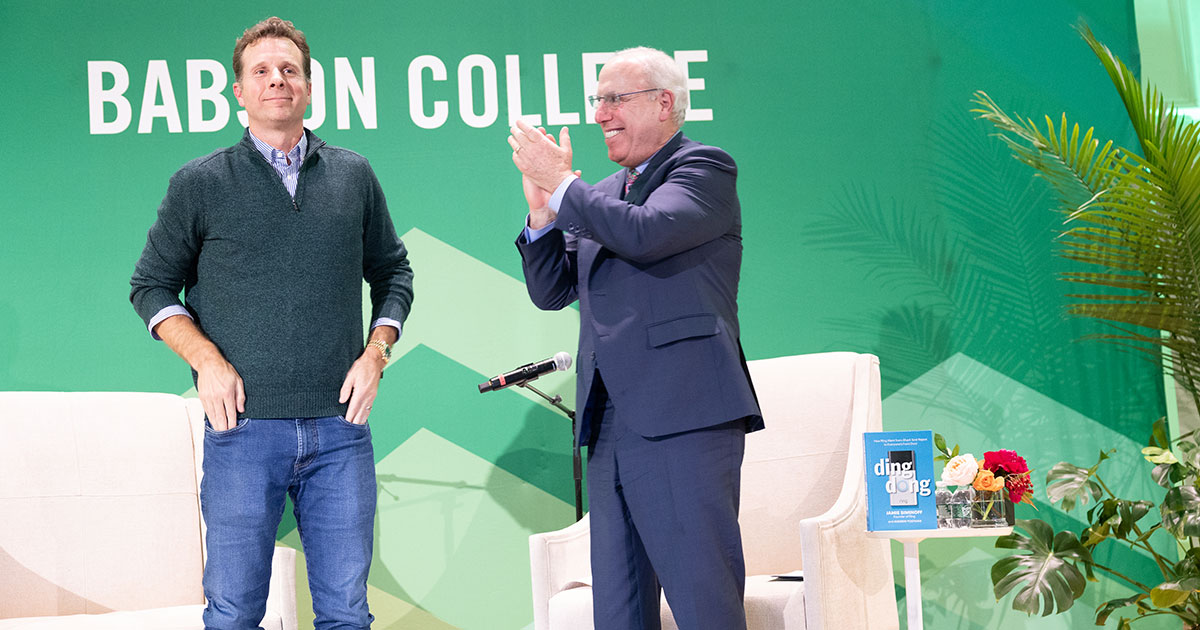
His return reflects an ongoing interest in invention and the possibilities created when connected technology becomes more useful in everyday life. Artificial intelligence, in particular, is creating new opportunities for home-security systems to interpret events, provide contextual information, and reduce the burden of monitoring multiple devices.
These developments also introduce important questions about privacy, responsible data use, and consumer trust. For companies operating inside people's homes, innovation must be balanced with transparency and meaningful user control.
The Entrepreneurial Lesson
Siminoff's story offers a useful perspective on how businesses are built. Rejection is not necessarily evidence that an idea lacks potential. Equally, a clever invention is not enough to guarantee commercial success. Founders must continually refine their products, understand customer needs, build capable teams, and adapt their strategies as markets evolve.
The deeper lesson is that entrepreneurial progress depends on persistence combined with the willingness to change direction when circumstances demand it.
From a garage-built prototype to a business acquired by Amazon, Siminoff's journey underscores the commercial power of addressing real problems with practical solutions. His next chapter will be shaped by how effectively emerging technologies can make homes more connected, useful, and secure.
For entrepreneurs navigating uncertain markets, that remains a compelling principle: identify a problem worth solving, remain committed to the underlying mission, and keep improving the solution long after the initial idea takes shape.